The Vaetra Files

The musings of Daniel R. Marvello, author of The Vaetra Chronicles

Revision is my best writing teacher (Beta Lessons 6)

Power of Light by Nat Sakunworarat
Power Of Light by Nat Sakunworarat
Revision is a path of illumination
for the story as well as for the writer within.

Before I started writing fiction, I picked up a few books on the subject to learn what was involved. The books were inspirational, but I quickly understood that the only way I was truly going to learn to write fiction was to start writing.

Once I did start writing, specific questions and problems came up. My writing library expanded as I went in search of answers and solutions.

All of that “book learning” has been helpful, but I’ve discovered that I have to practice many of the skills I learn about before I can internalize them. Some skills come naturally to me, which is to say I have an intuitive understanding of them and don’t have to work at incorporating them into my writing. Other skills are not so intuitive, and I don’t recognize mistakes related to them as I write.

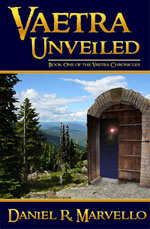
While writing the first draft of my story, I’m in “create mode” and only the lessons I’ve fully internalized flow into my writing. For example, the first draft of Vaetra Unveiled (Vaetra Chronicles, Book 1) was rife with adverbs. My MFA beta reader pointed them out repeatedly. The process of revising the manuscript to remove them helped me internalize the lesson that “one should avoid adverbs.” By comparison, my first draft of Vaetra Untrained (Vaetra Chronicles, Book 2) did not have that particular problem because every time I was tempted to use an adverb, a little alarm would go off in my head.

Some lessons are apparently harder to learn than others. I still have to watch my writing carefully for passive structure and too much description. My tendency to over-describe probably comes from years of writing non-fiction. I’m not sure where the passive structure comes from, but I have seen that it is a common failing in writers with a strong technical background.

I’m discovering that critique, which is essentially revising someone else’s work, is also good for internalizing writing lessons. Critique engages my internal editor the same way revising my own work does. By expressing my observations, I reinforce the lessons I’m passing along to the other writer.

Many of my writing acquaintances despise revision, but I welcome it. My work is always stronger after revision than it was before. But most of all, I like revision because it helps me learn to be a better writer.

*****

How about you? How do you learn to be a better writer? Do you look forward to revision? Do you agree that revision is a good teacher? Tell me in the comments!

Staurolite Release Tour Interview with Marsha A. Moore

I'm honored to be taking part in the Staurolite Release Tour with magical fantasy author Marsha A. Moore. Staurolite is the fourth volume of Marsha’s Enchanted Bookstore Legends series, and it looks to be an exciting read.

Marsha has been a member of the Magic Appreciation Tour for over a year now, and I sincerely appreciate how energetic and generous she has been with the other authors on the tour. I’m grateful to have this chance to return the favor.

For this stop on Marsha’s tour, she agreed to do an interview, which gave me a chance to ask her about her new book and slip in a few questions about what it’s like to write romantic fantasy. You may be surprised by her answers! Thank you, Marsha, for giving such thoughtful responses to my questions.

Interview with Marsha A. Moore

How much of yourself do you see in your lead character Lyra? Did you model her sensibilities after your own, or did you set out to write someone very different from yourself?

Seeking a Scribe 300 x 450It’s funny; the more I look at this story, the more of myself I see. My heroine, Lyra, is very much connected to me. Even in the first chapter of the first book, the childhood memories brought to her mind by Cullen’s magical tea are actually all mine. How Lyra interacts with her Aunt Jean was a way for me to work through my own issues when my mother’s health failed. As the series progresses, Lyra must continue goals established by the previous Scribes, who were strong females she descended from. In much the same way, I continue to uphold some of my mother’s values and ideals after she has passed. Some scenes/themes intentionally connect to my own experiences, like those, and others surprise me much later when I’m polishing my draft to send to my editor. I shake my head and hope no one other than my crit partners can identify the stranger similarities.

Your Enchanted Bookstore Legends series is now on its fourth volume with Staurolite, and it sounds like the Dark Realm has really stepped up its game. Is this the grand finale? Or do you have more volumes planned?

Heritage Avenged 300 X 480I’m presently writing the fifth and final book of my Enchanted Bookstore Legends, entitled Quintessence. In that book, there will be the ultimate showdown between good and evil in the culmination of the epic high fantasy. I’m expecting a fall release for Quintessence.

I’m concurrently writing a new standalone book that has more subtle magical elements, where reality and magic blur in the magical realism genre. I’m eager to work with that subgenre because there are fewer set parameters/tropes compared to the high fantasy I’ve written for many years. I’m also eagerly planning a magical realism series that I’ll spend much of next year immersed in.

That sounds like a lot of fun, Marsha. I wish you the best of luck with it.

With Staurolite, it looks like you've added a new dimension to your magic system: gemstones. How do gemstones integrate with your existing astrological/elemental-based system?

Lost Volumes 300 x 480The gemstones are definitely connected to the existing astrological/elemental-based system. Ancient lore has drawn connections of certain gems to the elements of nature: fire, earth, air, and water.

Previous books in the series explored those connections, especially Heritage Avenged (book #2). Using gemstones corresponding to elemental powers was planned from the beginning, although the information becomes pivotal in the current release, Staurolite (book #4).

In Staurolite, Lyra reads the recently recovered books written by her ancestors, who were the previous Scribes. She learns that there are four lost keystones that together can channel power from nature to the Alliance. Acquiring that power is vital since the land is under siege by the evil Dark Realm. The four keystones correspond to the four elements of nature: the Emtori Ruby is a fire stone; the Pearl of Pendola aligns with water; the moonstone from Aria connects with air; the fluorite from Indiana is an earth stone. And there is one gemstone that can control them all, both keystones and elements—Staurolite. It corresponds to the fifth element of nature, ether, the underlying essence of everything. While every magical being in Dragonspeir gains energy from their birthmate star which connects to only one element of nature, Lyra is different. She alone has the power to work the Staurolite gemstone.

As a romantic fantasy author, would you say your readers are fantasy readers who also enjoy the romantic elements of your stories, or romance readers who also enjoy the fantasy elements?

Most of my readers are fantasy readers who like romantic elements. Initially, with my first publication three years ago, I attempted to market to romance readers who wanted paranormal and fantasy elements. That really didn’t work for me. My stories are primarily fantasy with subplots of romance. I’ve done far better marketing to fantasy readers.

What would you say is the biggest challenge with writing romantic fantasy? Was it easy to merge the two genres?

I’ve always found combining fantasy and romance very natural. That may be because fantasy is my primary theme and romance is secondary. I include romantic elements to be able to make my characters more vulnerable. Their strengths and weaknesses are more apparent through the development of that close relationship. I enjoy combining genres. Heritage Avenged (book #2) even has another subplot of a murder mystery.

What advice would you give to other authors interested in writing romantic fantasy?

I think it’s important when plotting the book to decide which theme, the romance or the fantasy, will be dominant, then work to maintain that so readers won’t be confused. As a beginning writer, that was a difficult question for me to answer before I actually worked on a tangible outline for the story.

Thank you, Daniel, for such a great interview!

*****

You’re welcome, Marsha! It was fun coming up with questions and your answers were enlightening. Thanks for including The Vaetra Files on your tour.

To my readers, I hope you enjoyed the interview. If you would like to check out The Enchanted Bookstore Legends, please use the links below.


About Staurolite

Staurolite: Enchanted Bookstore Legend Four

Lyra McCauley, current Scribe of the Alliance, is the only one who can decode magic hidden in the recently retrieved ancient texts written by her ancestors, the first four Scribes. Information in those writings can help Lyra locate the four missing keystones, which will restore power to the Alliance and allow overthrow of the Dark Realm. With peace restored, she and her beloved, Cullen, could finally marry.

Time is short with the Black Dragon’s Dark Realm increasing attacks to avenge the death of his heir. Many innocent lives are lost. Alliance residents are forced into hiding. Magicals and blue dragons follow leadership of the Imperial Dragon and the other three Guardians into battle to defend the Alliance.

While Lyra unlocks the ancient magic, she opens herself up to scribal powers from her ancestors. She alone can fight the deadliest of the Dark Realm’s forces—the cimafa stealth dragons—but at a cost. The energy flux threatens her health and ability to learn where to find the missing keystones. Can Lyra overcome this shrewd tactic of the Black Dragon to decimate the Alliance?

Staurolite on Amazon.com

Other books in the series:
Seeking a Scribe: Enchanted Bookstore Legend One
Heritage Avenged: Enchanted Bookstore Legend Two
Lost Volumes: Enchanted Bookstore Legend Three


About Marsha A. Moore

OLYMPUS DIGITAL CAMERA

Marsha A. Moore is an author of fantasy romance. Much of her life feeds the creative flow she uses to weave highly imaginative tales.

The magic of art and nature often spark life into her writing, as well as watercolor painting and drawing. After a move from Toledo to Tampa in 2008, she’s happily transformed into a Floridian, in love with the outdoors. Marsha is crazy about cycling. She lives with her husband on a large saltwater lagoon, where taking her kayak out for an hour or more is a real treat. She never has enough days spent at the beach, usually scribbling away at stories with toes wiggling in the sand. Every day at the beach is magical! She’s been a yoga enthusiast for over a decade and is excited to be taking part in a Kripalu yoga teacher training program during 2013. That spiritual quest helps her explore the mystical side of fantasy.

http://MarshaAMoore.com

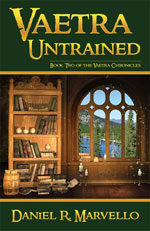
Cover Reveal for Vaetra Untrained

Earlier this week, my graphic designer gave me the news that the cover proof for my next release, Vaetra Untrained, is ready for final review. I’m not much for happy dances, but this moment was an exception. Having a cover brings me one step closer to making my goal of releasing the second book of The Vaetra Chronicles by June 1.

I got deeply involved in the cover design for both of my books. I had a clear concept in mind for Vaetra Unveiled, so that one came together quickly. But for Vaetra Untrained, we tried a few different concepts, so it took a lot longer. I spent hours looking through stock photography for images that would support the various alternatives.

In the end, I liked the design you see below the best. I imagine it to be the view from a room within The Archives. More specifically, the room is on the third floor above ground (the Council Level), and belongs to a Senior Councilor. The foreground image is from an amazingly talented artist who goes by the moniker “Unholy Vault.” The landscape you see through the window is from a photograph that I took at the real-life site where I placed The Archives in my parallel fantasy world of Mundia.

VaetraUntrained02_600w

The cover seems to hold up fairly well at small size and in black-and-white, and it follows the theme set forth with Vaetra Unveiled. Most importantly, I think it says “this is magical fantasy” to potential readers.

If you click on the image, you can see a larger version. I hope you like it!

A.E. Marling on Writing Action Scenes

I’m pleased to present fellow Magic Appreciation Tour author A.E. Marling for a stop on his “Gravity’s Revenge: Kickstarter Tour with a Vengeance” blog tour.

A.E. Marling is the author of two titles in the captivating Enchantress Hiresha series (Brood of Bones and Fox’s Bride) as well as a Young Adult title, The Gown of Shadow and Flame. The subject of his tour, Gravity’s Revenge, is the latest addition to the Enchantress Hiresha series. You can learn more about the Kickstarter campaign and enter to win a $30 Amazon Gift Card at the bottom of this post.

Without further preamble, here’s A.E. Marling sharing a few valuable hints for writing action scenes…

Writing Action Scenes: The Rule of Thirds

by A.E. Marling

First, the bad news: Choreographing an intricate fight scene and describing each cut and thrust will lead to bloodless prose. Example:

The ogre-sized man attacked Nevon with two five-foot longswords. Nevon leaped to the side and swung in with his hammer. The big man parried him and swung out. Steel clanged off Nevon’s plated boot. Nevon circled him, stepping back whenever the swords flicked too close. Nevon rose his hammer high then ducked under the twin longswords and struck. His foe’s ribs crunched, and he fell back, knees jerking upward, blades spinning to the ground, one breaking.

First of all, the reader has no reason to care. A movie might start with an action scene like this, and the flash of metal and pounding of dramatic music might hold the viewer’s attention. I suggest against action-heavy or gore-heavy scenes in the opening pages. Until the reader cares about the protagonist, violence is just so much clanging and grunting.

Next, understand that not all readers are good at visualizing complex battles. A writer might see the fight in dramatic movie angles, while a reader might be confused who is standing where, or what exactly is happening. To ensure every part of the fight is visualized perfectly, an author might go into greater detail, describe each step and weapon angle. In doing so, the description drags out, the pacing slows down, and the reader loses interest. Trying to write action like we see it in movies will lead to failure.

Writers should never try to out-movie the big screen. Instead, turn to the strengths of books by describing things movie watchers can never experience. Immerse the reader into the protagonist’s perspective with visceral sensations. Example:

The ogre-sized man attacked Nevon with a longsword in each hand. Nevon leaped to the side, and one blade cut through his hair so that he felt a tug on his scalp then a startling coldness on his head.


Gasping, Nevon felt his insides contort, his clamping chest fighting against the air he was trying to gulp. He circled the larger man, stepping back whenever the swords flicked too close. Air from their near misses chilled his face.


Nevon rose his hammer high then ducked under the twin longswords and struck. His own wrist rang from delivering the blow. His foe’s ribs crunched, and he fell back, knees jerking upward, blades spinning to the ground, one breaking.

I deleted some of the choreography in favor of actions that resulted in direct sensations. The scene is beginning to be interesting because readers are better able to process feelings than visualize advanced battle moves. Also, the sensations bring the reader close to the protagonist, increasing concern and suspense.

Two Thirds

In the above example, the words in sentences describing sensations are roughly equal in number to those describing choreography. I would call a battle scene with this composition two-thirds done. The missing piece of the pie is again something that movies can’t do (or at least not well): include the internal thoughts and emotions of a protagonist. During battles, protagonists are either awash with fright or humming with deadly focus. Letting your readers know how the protagonist feels will draw them into the experience. I would also include dialog in this third.

“Time to take off that head of yours. You ain’t using it.” The ogre-sized man attacked Nevon with a longsword in each hand.


Nevon leaped to the side, and one blade cut through his hair so that Nevon felt a tug on his scalp then a startling coldness. He wondered if his skull had already been cracked, but no, he had only lost a chunk of hair.


Gasping, Nevon felt his insides contort, his clamping chest fighting against the air he was trying to gulp. He hated to think that they all depended on him. He, a carpenter with no more than a tradesman’s hammer against this trained killer.


He circled the larger man, stepping back whenever the swords flicked too close. Air from their near misses chilled his face. He knew he might die any second if he didn’t try something soon, anything.


Nevon rose his hammer high then ducked under the twin longswords and struck. His own wrist rang from delivering the blow. His foe’s ribs crunched, and the man fell back, knees jerking upward, blades spinning to the ground, one breaking.


It was over, and Nevon couldn’t believe it. He felt dazed and sick.

Rule of ThirdsIn sum, for book battles to be engaging, less has to happen in them to allow for more sensations, thoughts, and emotions. Next time you’re writing action, remember the rule of thirds.

~

AE Marling encourages people to touch the sky of human imagination and read fantasy. He has launched a Kickstarter for the funds to pay artists and editors to make his next epic fantasy into a wonderful book, complete with internal illustrations. You can support the Kickstarter and earn a special edition of the book by clicking on the link below:

Gravity's Revenge: an epic fantasy w/internal illustrations

As a special treat for Vaetra Files visitors, A.E. Marling is raffling off a $30 Amazon gift card! Enter to win below:

Scrivener: My New Writing Tool

Since about 2006 I’ve been putting all of my writing projects into a software program called IdeaWeaver. I used IdeaWeaver as a note repository, personal knowledge base, and first drafting tool. It helped my wife and me write many articles and several non-fiction books. I loved working in IdeaWeaver rather than a word processor like Microsoft Word because it let me write content in chunks and organize them with topics, categories, and an outline. It totally got out of my way when it came to writing. However, IdeaWeaver also had serious limitations. It had no search, spell check, or the ability to work with images or any other kind of external file. It was strictly a first-draft content generation tool.

Scrivener Screen ShotOver the years, a few other writing tools have hit the market. I kept hearing great things about Scrivener from other writers. When my wife started on her first fiction novel, I suggested she give Scrivener a try. She did, and she loved it instantly.

I was still finishing up Vaetra Untrained, so I didn’t move to Scrivener right away. I figured I’d try it out when I started the first draft of Vaetra Unleashed, the third Vaetra Chronicles novel. About two weeks ago, I finally installed Scrivener and went through the tutorial.

I was blown away.

Scrivener has all the features of IdeaWeaver, plus dozens more. The search feature is outstanding, and the organizational tools are marvelous. But for the most part, Scrivener hides its power and lets you concentrate strictly on writing if that’s all you need to do.

The strangest thing is that Scrivener has somehow improved my writing productivity. There’s something about the interface that sucks me into my manuscript and makes me want to keep writing. I’ve never experienced that feeling with any other writing tool. Normally, I get writing fatigue after a couple of hours and want to move on to something else. I haven’t figured out what Scrivener’s secret is, but I like it.

Scrivener is much more than a word processor. It is a writing environment. You can link external files into your project, collect research materials, categorize and tag content to your heart’s content, and of course, write at the speed of your fingers on the keyboard. I love the full-screen mode that lets you focus on a single scene at a time. Scrivener lets you develop content however you like and then compile it into a manuscript. It can even generate EPUB files for you, although you have to do a bit of work to create something that is publication-ready.

Not only have I started on Vaetra Unleashed in Scrivener, but I’m moving my Vaetra Chronicles world-building reference into a Scrivener project as well. Scrivener has excellent features for building knowledge base/compendium projects.

I’m sure Scrivener isn’t for anyone. The very things that give me happy tingles probably fill less techie users with confusion or dread. However, you can download the software for free and see if you like it before you spend a dime.

I highly recommend Scrivener to anyone who writes. At $40, this tool is a steal. See for yourself:

Scrivener Home Page

Interview with a Romantic Fantasy Author–Nicolette Andrews

When Nicolette Andrews announced her Diviner’s Prophecy Tour, the timing couldn’t have been better. It just so happens that I’ve been thinking a lot about romantic fantasy lately. My wife is just about to finish her first romance novel, which prompted me to wonder what kind of story she and I might produce in collaboration.

That idle speculation turned into a persistent question: Could we write a romantic fantasy together? She reads fantasy but prefers romance. I read some romance but prefer fantasy. What if she took charge of the romantic story line and I took charge of the fantasy story world? When I proposed the idea, she was cautiously optimistic. “Let’s see if I can finish my first book, then we’ll talk.”

That’s right about when I got the Magic Appreciation Blog Tours request from Nicolette. Here was a romantic fantasy author who was willing to do interviews. Serendipity!

I told Nicolette my story, and she enthusiastically embraced the idea of answering my questions. We did the interview in two passes, just in case her answers inspired additional questions (which they did).

So here is my interview with Nicolette Andrews, magical romantic fantasy author extraordinaire. Be sure to check out her new release Diviner’s Prophecy after you enjoy the interview. Her bio and links are at the end of this post.

Thank you for including The Vaetra Files on your blog tour, Nicolette!


What made you decide to write romantic fantasy, rather than straight fantasy or straight romance?

I've always loved romantic fantasy. I used to devour Juliette Marillier's novels as a teenager, and when I decided to write I knew I wanted to stick to what I loved. I also love the human element and the way relationships can stir up a plot line.

Speaking of plot, would you say your novels follow the classic romance meet/lose/get structure, or do you lean more toward the fantasy Hero's Journey (aka Mythic) structure? Or perhaps something else entirely?

For me I like to deviate a bit from the classic structures, my relationship building varies between story lines but in Diviner's Prophecy I focus a lot on unrequited love and unattainable love along with a love triangle just to spice things up. ;)

Who are your favorite R/F authors? Did any one book inspire you to write in that genre?

To name a few: Juliette Marillier, Jaqueline Carey Anne Bishop and Melanie Rawn. All of them are amazing writers and I look up to all of them. I think Jaqueline Carey and Juliette Marillier inspired me the most though.

[Daniel says: I’m a Melanie Rawn fan myself. I loved her Dragon Prince and Dragon Star trilogies.]

If I were to pick up one book from each of those authors, which titles would you recommend I get?

For a full list, you can check out my Goodreads reading list.

What has been your biggest challenge in writing R/F?

Oooh. That is a good question, I would have to say at first realistic relationship development. It's very tempting to force to people together and say 'have chemistry' but jut like movie actors the romantic elements have to work and it was a bit of trial an error getting it just right.

Can you recommend any writing books, blogs, or other tools that would help a new romance novelist learn how to show that chemistry?

I've read a lot of writing books. The Art of War for Writers is a great placed to start in general on writing. As far as romance scenes, my advice read, read and read some more. I also like to watch movies with romance and sometimes people watch.

How would you rate your love scenes? G/PG/PG13/R/X?

I will freely admit I am a bit of a prude, the highest rating my love scenes would be PG-13 even then I doubt it would be anything too graphic. I focus more on the emotional relationship than the physical.

[Daniel says: Me too. I doubt I’ll ever want to do more than a “fade to black” love scene. My wife is the same way.]

How do the fantasy aspects of the story influence the relationships in your books? Would you say they are "incidental" or that they play a big role in how relationships develop?

In Diviner's Prophecy, the fantasy elements play a pretty big role. The main character has lost her memories as a result of a spell. Her missing memories influence the way she perceives those around her and without giving too much away potential love interests.

Are you planning to base most of your R/F stories in the world you developed for the Diviner's series, or do you have plans for more worlds or even non-fantasy romantic works?

So far I have a planned three books in the Diviner's Prophecy, and I have one short story set in the same world. I have some general plans for a Novella set in the same world and maybe more stories in the possible future. We shall see. I am planning on sticking to Romantic Fantasy for the long term. It's my favorite genre and I couldn't imagine doing it any other way.

I notice that you've posted a few works on Wattpad. Would you recommend it to other writers?

This question has come up quite a few times since I became published. And the answer is a resounding 'Yes'. Wattpad is an amazing community of writers and readers and it's the most effective social media network I have found to sell my books. (I recently did a guest post on Lindsay Buroker's blog about this topic.) I actually published Diviner's Prophecy there before selling it on Amazon as I wrote it and I have another current WIP on the website as well. The reader engagement is wonderful and I feel like I can attribute a lot of my initial sales to my 'followers' there.

[Here’s a link to Nicolette’s WattPad article:]

   How to Connect with Readers Using WattPad


Diviner's Prophecy

Maea is a diviner, the last of a once influential family of women who could see into the past and future through visions. Though she holds immense power, once sought after by kings, she is helpless. A spell has wiped away her past and crippled her abilities, leaving her dependent upon her foster mother and her companion. Maea wants to trust them but their evasive behavior in regards to her missing memories makes her wary. They claim an accident caused her memory loss. Maea, however, remembers the night the man took her life away. She suspects they are accomplices to the act and further believes they plan to use her in her their own political plotting's.

At the royal court, the first diviner speaks to Maea through a vision and charges her with an immense task: to stop a catastrophe that threatens to destroy her, her kingdom and all life.

Diviner’s Prophecy on Amazon.com

NicoletteAndrews

Nicolette Andrews born and raised in San Diego CA. She currently resides with her husband, two daughters a dog and a cat. She enjoys reading a good fantasy novel with heavy doses of magic and intrigue. When she's not reading or writing, she likes to take advantage of the San Diego sunshine by walking and hiking. Or on occasion trying her hand at gardening.

The Nicolette Andrews Blog


I hope you enjoyed the interview, everyone. Happy reading!

The 5 Characteristics of Magical Fantasy

What does magic mean to you? I’d be surprised if you didn’t have to sit back for a moment and ponder your answer to that question. Magic means different things to different people, but as the founder of the Magic Appreciation Tour (MAT), I’ve had to devise a concrete definition for deciding which books may be listed on the site versus which may not.

I think most of us know magic when we see it. My overall litmus test for whether or not something is magical fantasy is extremely vague but surprisingly well-understood by most writers: if you hand your book to a huge fan of magical fantasy, will that reader finish your book and agree, without a doubt, that your story included magic?

Once in a while, that basic test isn’t enough. When authors aren’t sure, they usually contact me and ask before they submit the book in question. At that point, I have to evaluate the story and make a decision on whether or not it is magical fantasy. To do that, I need to clearly define the criteria that distinguish a magical fantasy story from any other kind of fantasy story. After struggling with those criteria at various times over the past year, I can report that it is easier said than done.

What is magic?

Several genres fall under the umbrella of “speculative fiction,” and all of them include stories that could claim to contain magic. Even some science fiction stories cross the line into magical fantasy. I would argue that Jedi Knights and their use of The Force make Star Wars a magical fantasy in addition to being a science fiction icon.

On the other hand, a lot of speculative fiction is not magical fantasy. Stories with ghosts, vampires, and were-creatures are usually categorized as paranormal or supernatural, but they aren’t necessarily magical.

So what’s the difference? I looked up several definitions of each term and summarized them as follows:

  • Paranormal: events or perceptions without scientific explanation.
  • Supernatural: above or beyond what can be explained by natural law.
  • Magic: The art of producing a desired effect through human control of supernatural agencies or forces of nature.

The terms “paranormal” and “supernatural” are practically synonyms. However, the definition of “magic” includes a critical element that the other two lack: producing a desired effect through human control.

These definitions help, but they are a long way from a set of consistent criteria that can be used to evaluate whether or not a book is magical fantasy.

What makes fantasy magical?

To show you how I arrived at the criteria I use today, it might help to take a look at a few examples.

Are the undead magical? I would say no, for the most part. A story about zombies has animated corpses running around causing chaos, but the zombies themselves are not magical. On the other hand, if the story is about a necromancer who uses a spell to raise zombies from the grave, now the story has a magical theme.

Vampire stories skirt close to the edge of magic because vampires have abilities that seem magical. For example, vampires can often transform into a bat, move with superhuman speed, and charm human victims. But do those abilities involve magic? Usually, authors present these special abilities as inherent skills that require no special ceremony, incantation, or ritual to activate. Vampire skills may be paranormal, but they are not magical.

Some months ago, an author presented me with a delightful story about flying horses and their riders. I decided to read through the excerpt to verify that the story had magical elements. I enjoyed the excerpt and I seriously wanted to include the book, but I found no evidence that magic played any role in the story; the horses could fly because they had wings. After verifying my assessment with the author, she withdrew her book from consideration with understanding and good grace.

As I mentioned above, some science fiction stories blur the line between science and magic. The same with steampunk. Even magical realism stories, which are solidly in the fantasy genre, can push an ostensibly magical theme toward the realm of science fiction by defining magic with a framework of laws, essentially giving magic a “scientific explanation.” But a line has to be drawn somewhere.

My definition of magical fantasy

After over-thinking this subject for more than a year, I’ve come up with the following five characteristics that define what magical fantasy is for the purposes of the Magic Appreciation Tour.

1. Magical energy derives from a life force, an elemental force, or a divine source.

2. Use of magical energy creates physical manifestations. I’m using the term “physical” loosely here. Some magic spells affect the psyche of the victim, so while there is no visible manifestation, a verifiable manifestation does affect a physical being.

3. The art of using magic is learned, not innate. For example, being able to transform into wolf form and then back into a human form is an innate ability of werewolves; it isn’t something they have to learn how to do. This guideline does not require that just anyone can learn to use magic. In many worlds (including mine), some people are capable of working with magical energy and some aren’t. The point is that even beings who are capable still need to learn how to “work” magic to achieve a desired effect.

4. Magical energy is wielded deliberately. Magical effects don’t “just happen.” Spells are deliberately cast by way of a ritual, incantation, gesture, device, potion, or some other mechanism that draws upon magical energy and generates a physical manifestation.

5. Magical manifestations are clearly identified as being magical in nature. This is the catch-all rule. If your story states that your characters are using magic to accomplish something, I’ll take your word for it. On the other hand, if you take what appears to be a magical effect and give it a scientific explanation, I’ll accept that your story is based in science, not magic.

I won’t claim that these five characteristics are the perfect definition of what qualifies as magical fantasy, and they may continue to change over time. For now, they cover the circumstances I’ve had to deal with so far. In fact, anyone who is familiar with the MAT catalog may have noticed that we do have a few vampire and werewolf stories. Those stories were accepted because they include magic use as well as paranormal creatures.

In the end, the whole point is to make sure that fans of magical fantasy get what they expect when they acquire a book through the MAT. I think our curated book selection and our detailed catalog listings do a good job of making sure that’s the case.

Spectacular Spring Equinox Fantasy Sale

Spectacular Spring Fantasy Sale - March 20-22, 2013 - all books under $5

A group of 21 authors from the Magic Appreciation Tour(including me!) are getting together for our first group sales event. We’re all offering our books for under $5 each during the Spectacular Spring Equinox Fantasy Sale on March 20-22.

You can choose from over 35 magical fantasy titles. Many of the books are on sale for as low as 99 cents, and some are even free. If you have been looking for a good opportunity to load up on some great summer reading material, here’s your chance! Let us help you escape into magical lands on fantastic adventures.

But there’s more! A lot more. Visit the sale page to enter the master giveaway of over 40 great prizes. Several of our authors are celebrating the Spring Equinox by offering even more prizes on their blogs. Links to those giveaways are conveniently listed for you at the bottom of the sale page.

Mark your calendar to visit the Spectacular Spring Equinox Fantasy Sale on March 20-22 (tomorrow through Friday), and don’t forget to tell your friends about the sale.

You can get Vaetra Unveiled, the first book in my Vaetra Chronicles series, for just 99 cents from now through the end of the sale. Don’t miss this opportunity!

I’m having my own little Equinox celebration right here on The Vaetra Files. If you have a U.S. mailing address, you can enter to win a signed, paperback copy of Vaetra Unveiled:

Has the Digital Slush Pile Changed the Way We Buy Books?

Tracy Falbe, one of my writer friends at the Magic Appreciation Tour, wrote an interesting article on the Digital Book Today blog. The post is titled “Are We Enjoying a Golden Age of Reader Rewards?

Her post and some of the comments that followed got me thinking about how my own buying habits have changed and how they’ve remained the same in the transition from print to digital reading. One of the commenters lamented the flood of unedited and otherwise poor-quality work that has been released directly into the marketplace. The slush pile has effectively moved directly onto the retail sites. But is that really such a bad thing? Has it changed the way readers buy books? I say no.

Slush Pile? What Slush Pile?

I believe readers have all the tools they need to make an informed buying decision. There’s no reason for a reader to spend money or waste time on a dud book. Readers have descriptions, reviews, and excerpts to help them decide whether or not a book is right for them. Some readers even use price as a filter, although I personally find that metric unreliable.

Back before online buying, I did not use reviews to make a purchasing decision. I don’t use them now either. I buy books the same way I always have: the cover catches my eye, I read the description to see if it sounds like a story I’d like to read, and I check out the excerpt to see if I like the author’s style.

I agree that the market has been flooded with a lot of books of questionable quality. I also applaud the fact that great stories are no longer being overlooked or held back by the marketing department of a gatekeeping organization. I’ve read plenty of bestsellers, both pre-Kindle and now, that I thought were terrible. But taste is a subjective thing and I don’t begrudge other readers the joy they got out of reading that same book.

Yes, the slush pile has moved into the bookstore. I’m fine with that. For the most part, I never come in contact with the worst duds. Most retailers give promotional weight to the books that are the highest rated and the best selling. If your tastes tend to run with the majority, that’s a great thing. If not, it’s kind of a bummer. Regardless, readers do not have to sift through the slush pile. They actually have to make an effort to find the least popular books.

The Bounty of Free

KDP Select and other “price matching” tricks have created plenty of opportunities for readers to get their hands on free e-books. Although it’s true that in the past you rarely could get free versions of first-release print books, free books are not unique to the digital revolution.

The bounty of free has existed since books have been mass-produced. It was possible to get free and bargain books even in “the old days.” When the cover price for paperbacks went above $5 (yes, that was a long time ago), I pretty much stopped buying new books except on rare occasions (read: mega sale). I started shopping in used bookstores and at library book sales. I checked books out of the library. Sure, I never could get my hands on that hot new bestseller everyone was talking about, but I’m patient. I knew I’d get it eventually.

Tracy mentioned that authors are offering all kinds of free goodies and doing giveaways to get attention for their books. I agree we may be seeing more of that promotional “largess” (to use her word) in the current market. However, I think the increase in giveaways is more about authors promoting their low-margin product in a highly competitive marketplace than it is about the move to digital reading.

The Changes are Mostly Good

My shopping patterns haven’t changed much. I pick up free e-books and I love the low prices of most e-books today. I still won’t spend more than $5 on a book, so once again, the newest bestsellers are generally out of my reach. I don’t care. I have plenty of other material to choose from, and the self-published books I’ve read continue to impress me.

One thing that has changed is that a lot of the works I’ve found would have never seen the light of day if they had to go through a bestseller-minded gatekeeper. I wonder how many wonderful stories the world has lost out on because the author gave up before he or she found the right agent or publisher? I suspect the answer is many thousands. Possibly millions. Writers publish something like 50,000 titles per month through KDP. Imagine the pent up supply of books that figure represents, and how many stories from past writers have been lost forever.

For me, the only sad thing is that there is no “aftermarket” for used e-books. That may change because Amazon has registered a patent on a mechanism for reselling “used” e-books. Meanwhile, libraries and the publishers who supply them are still trying to figure out what e-books mean to them.

I have faith that those issues will be ironed out. In the meantime, I’m a happy camper because I have more great stories to choose from than ever.

The Last Priestess Tour with Elizabeth Baxter

I originally met Elizabeth Baxter at the Writer’s Café on KindleBoards.com where she goes by the whimsical moniker “SmallBlondHippy.” Her comments on the forum made a positive impression on me, so I was happy to see her book registration come through at the Magic Appreciation Tour.

Elizabeth is doing a blog tour to celebrate the release of The Last Priestess, book 1 of The Songmaker, her new epic fantasy series. I’m excited to be hosting a stop on her tour. Her guest post today features an interview with Maegwin, the lead character of the story. I hope you enjoy it!

About The Last Priestess

There is a name that is uttered only in whispers. The Songmaker. A ruthless rebel mage, he is bringing civil war to the once-peaceful kingdom of Amaury, enveloping all in a tide of violence. For Maegwin, a tormented priestess, the path forward lies in forgiving her temple's enemies—but she dreams only of revenge. For Rovann, a loyal mage haunted by his failures, salvation might be found in the unthinkable: defying the very king he swore to protect. If they are to succeed they must form an unlikely alliance. For someone must stand against the Songmaker. Someone must save Amaury from his dark designs. But first, they’ll have to learn to trust each other.

And so a magical fantasy of darkness and redemption begins.

Interview with Maegwin

The Last Priestess is the title of the book. Does that refer to you?

You know what, I suppose it does. I never really thought of it like that. But yes, I am the last of my kind, after what happened at my temple that day - but I’d rather not talk about that.

Okay, can you tell us a little about a priestess's way of life instead?

I served in the temple of Sho-La. Some call Her the World Mother, Bringer of Life. Ah, it was a grand life! Hard work, but beautiful. Each morning I would rise before dawn and gather with my sisters for morning prayers. We'd face the rising sun and sing Sho-La’s glory until the sun rose above the horizon. The rest of the day was spent working out in the fields or helping around the temple, interspersed with a timetable of prayers and meditations. But the best times were when I went on retreat - spending days and nights alone in the forest contemplating the glory of Sho-La's creation. Can you imagine it? Nothing but stillness and solitude. That's when I felt truly alive. But there is a darker side to Sho-La, one that revels in anger, despair, destruction. Worship of the Dark Goddess has been banned in my order for centuries but lately I've felt pulled to the darker aspect of Sho-La. Perhaps she can help me find what I most desire. Revenge.

How did you become a priestess? What was your early life like?

I grew up on the streets of Mallyn. I don't remember my parents. I just have hazy memories of running with the other street children and stealing whatever we needed to survive. I suppose it was a hard life but I don't remember it that way. Things were just the way they were. You got on with it. And I was lucky. When I was about seven I stumbled on a talk being given by one of the priestesses in the town square in Mallyn. I was hungry and tried to steal her purse. She caught me trying to sneak it from her belt. She could have called the Sheriff but she didn't. Instead, she took me to the temple and I became a novice. That priestess became the Holy Mother a couple of years later and I served under her. That is, until the men came and everything changed.

You have some interesting companions in The Last Priestess. How do you get on with them?

Interesting? I suppose that’s one way of describing them. Arrogant, annoying and condescending is another. Although I’m probably being unfair. Leo is all right. He’s a minstrel and to hear him talk you’d think he’s the most famous singer ever to walk the land! Still, he’s cheeky and boastful but has a kind heart. Then, of course, there’s Rovann. I don’t know what to make of him. He reckons he’s just a messenger from the king but I think there’s more to him than he lets on. We’re travelling to the capital at the moment so maybe I’ll find out more once we get there although I’m a little nervous about meeting the king. You see, I was supposed to be hanged in Mallyn. Will the king pardon me or execute me? I’ll soon find out.

Connect with Elizabeth Baxter

Get The Last Priestess for just $2.99 at Amazon.com

Elizabeth’s Blog

Elizabeth’s Amazon Page

Elizabeth’s Facebook Page

Elizabeth’s Twitter Profile